Climate Change and Food Security
Science: IPCC Assessment 2007
Our commitments to temperature increases and food production losses
Today's absolute temperature increase
commitment 1.5ºC
By published research 2.4ºC
Policy target 2.0ºC
Current international proposals
for greenhouse gas emissions reductions 3.5ºC to 4.0ºC
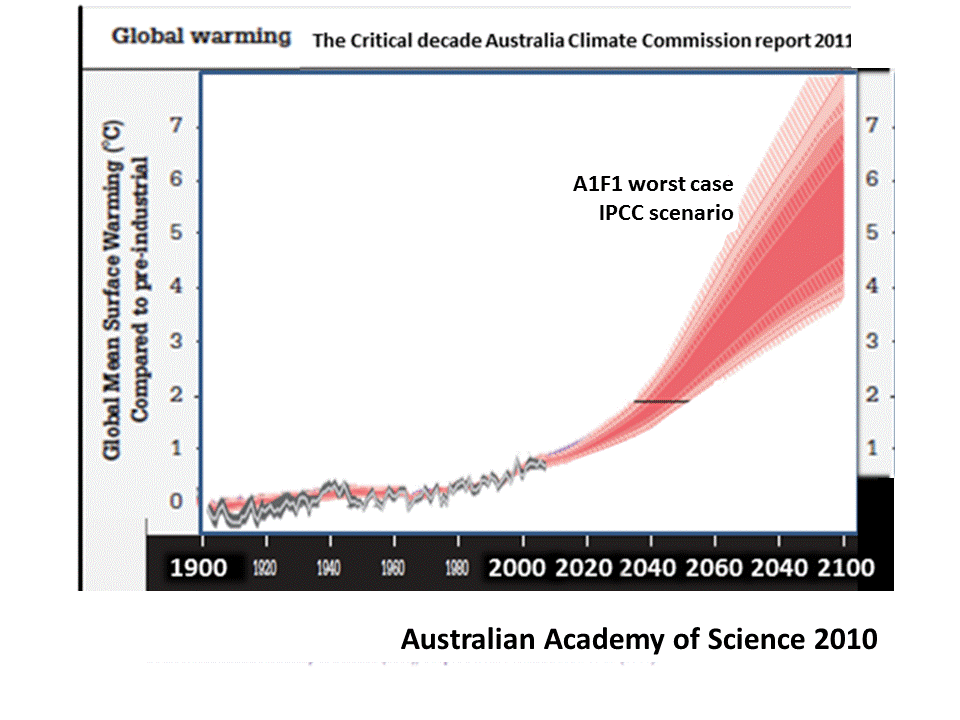
Global crop yield is at risk of decline at a global temperature increase of 1.5°C and
can accommodate no more than 3.0°C before beginning to decline (IPCC WG 2 Technical report 07).
can accommodate no more than 3.0°C before beginning to decline (IPCC WG 2 Technical report 07).
(corrected for global increases from pre-1900).
GLOBAL WARMING, CLIMATE CHANGE,
& EXTREME WEATHER INCREASE
PUTS ALL CROPS, IN ALL REGIONS INTO DECLINE.
Coasts: Models indicate that salination from sea level rise and coastal damage spreads far inland as well as up river estuaries and deltas that are food growing regions.
Health: Food production in the developing nations depends on human labour, and human populations in these regions will be badly affected by multiple adverse health impacts from climate change.
Ecosystems and species: Even agricultural productivity in developed nations depends on the health, the regional ecosystems and biodiversity, one example being pollinators.
Water: both extremes of precipitation and drought that will be increased by global climate change disasters to food productivity.
Small glaciers: Huge populations depend on seasonal spring run-off from small mountaintop places for crop irrigation. Melting the ice will initially cause flooding of the agricultural regions they feed into followed over time by progressively less naturally irrigating water for crop production.
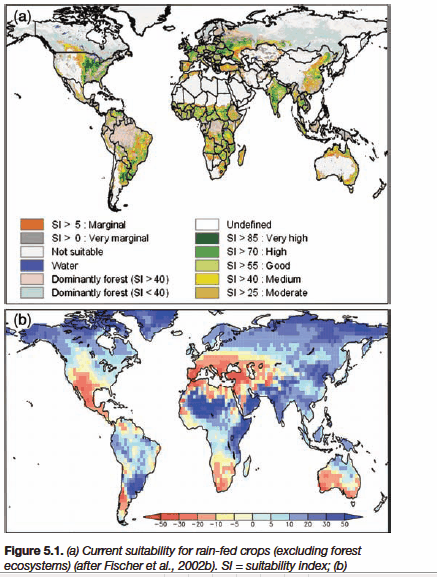
Current suitability for rain fed crops IPCC 2007.
Less than 40% of the land surface is good agricultural land .
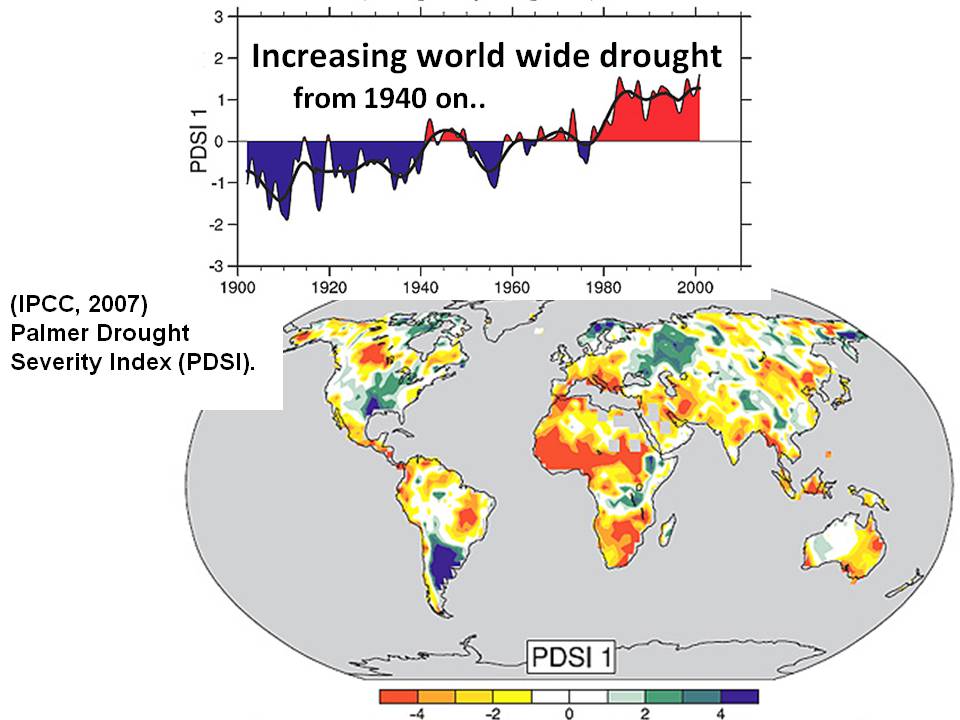
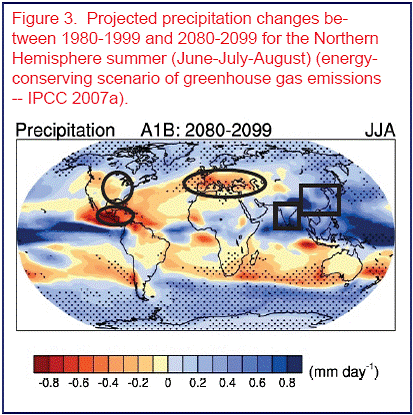
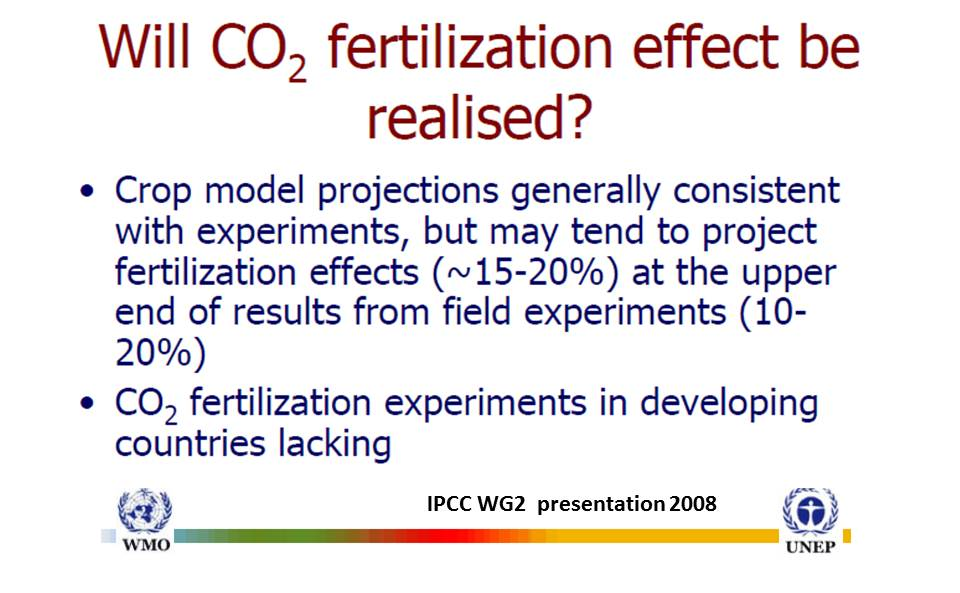
IPCC model results composite by NRF 2010
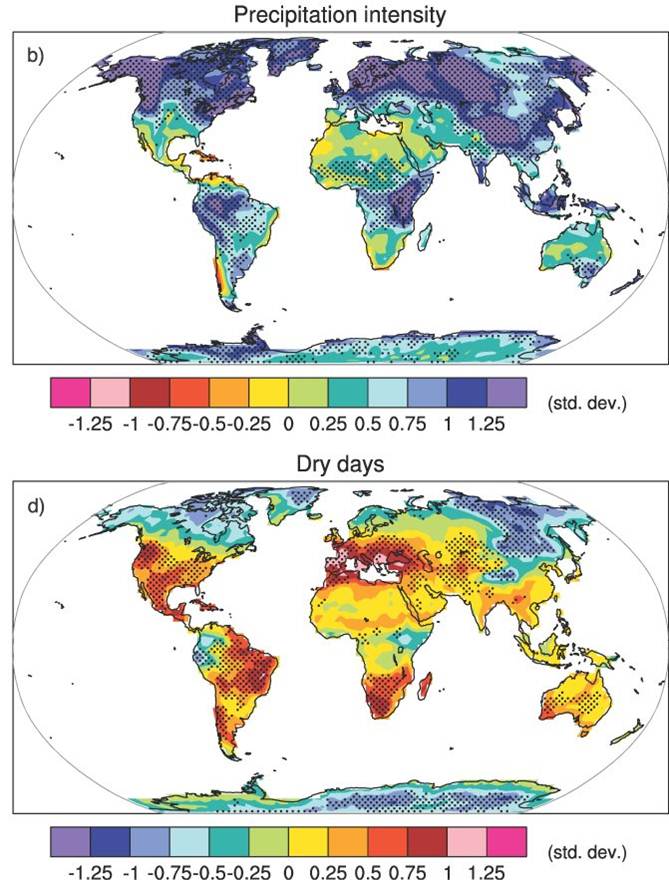
The IPCC presentation has circled in black the world's best food producing regions that will be hit by increased dryness and droughts.
Change in wet and dry days mid A1B scenario 2000 to 2080.
IPCC 2007
NB. Too much and too little rain are damaging to crops
0.5º C safety limit
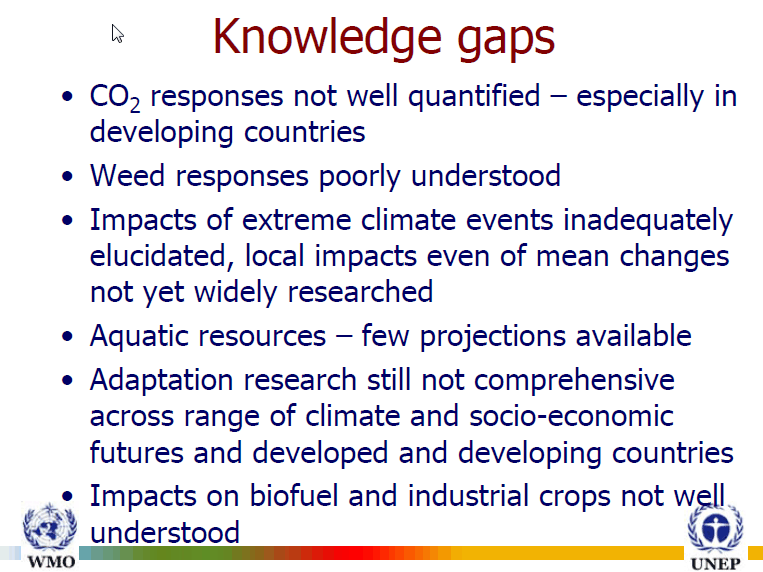
A temperature increase above 0.5ºC is/was (too) dangerous for water food and health security to the most climate change populations- in the developing nations dependent on subsistence/small holder food production, coastal populations, populations dependent on glacial spring run-off.
Long term food security
Temperature does not stop increasing at 2100. From 2100 to 2300 there is at least another 0.5ºC increase.
With respect to food security to avoid, for example, a disastrous 2ºC temperature increase affecting all future generations we have to limit the 2100 increase to 1.5ºC (at a stabilized atmospheric GHG concentration).
To avoid a long term increase of 3ºC that will destroy most if not all of the planet's agricultural food production capacity we have to limit the increase to 2.0ºC by 2100.
The IPCC assessment on food relies on climate crop models. In addition to the the food production losses by the few agricultural changes that are captured by the models, the impacts in the above chart each and all added to further crop losses.
N.B. The IPCC assessment of food impacts is not a risk assessment, as pointed out by the National Research Council greenhouse gas report in 2010 because large impacts are not captured by the climate crop models.
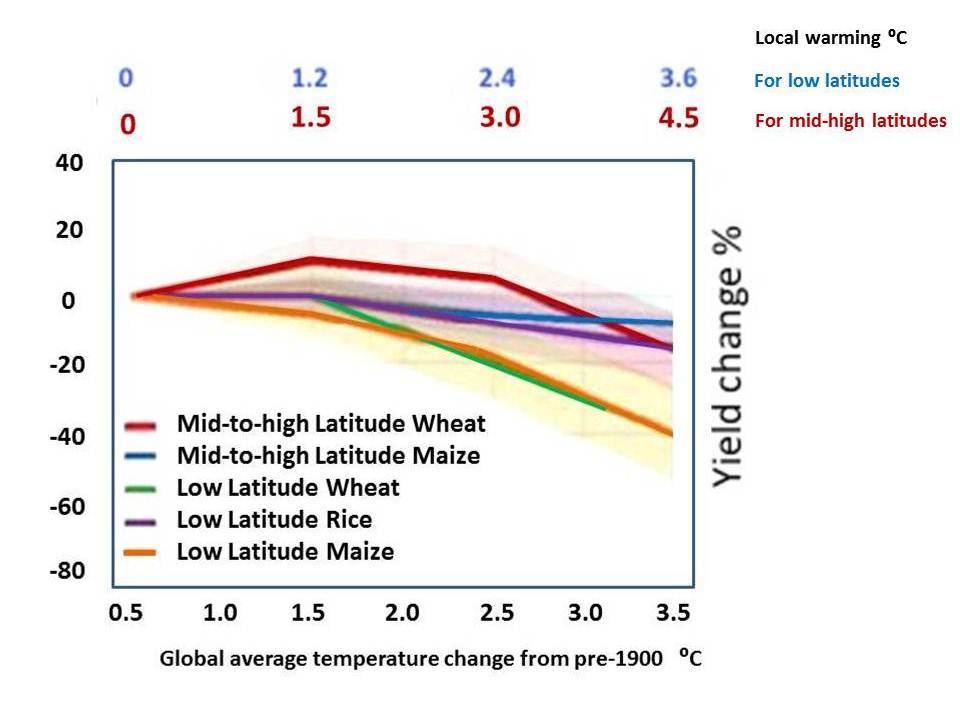
Crop productivity is projected to increase slightly at mid- to high latitudes for temperature increases of up to 1-3°C depending on the crop, and then decrease beyond that.
At lower latitudes, especially at seasonally dry and tropical regions, crop productivity is projected to decrease for even small temperature increases (1.0 -2°C).
Globally, the potential for food production is projected to increase with increases in local average temperature over a range of 1.0-3°C, but above this it is projected to decrease.
Increases in the frequency of droughts and floods are projected to affect local crop production negatively, especially in subsistence sectors at low latitudes. (IPCC 2007)
The above are local temperature increases from 2000, which is approximate to global increases from pre-1900. (see NRC below)
At lower latitudes, especially at seasonally dry and tropical regions, crop productivity is projected to decrease for even small temperature increases (1.0 -2°C).
Globally, the potential for food production is projected to increase with increases in local average temperature over a range of 1.0-3°C, but above this it is projected to decrease.
Increases in the frequency of droughts and floods are projected to affect local crop production negatively, especially in subsistence sectors at low latitudes. (IPCC 2007)
The above are local temperature increases from 2000, which is approximate to global increases from pre-1900. (see NRC below)
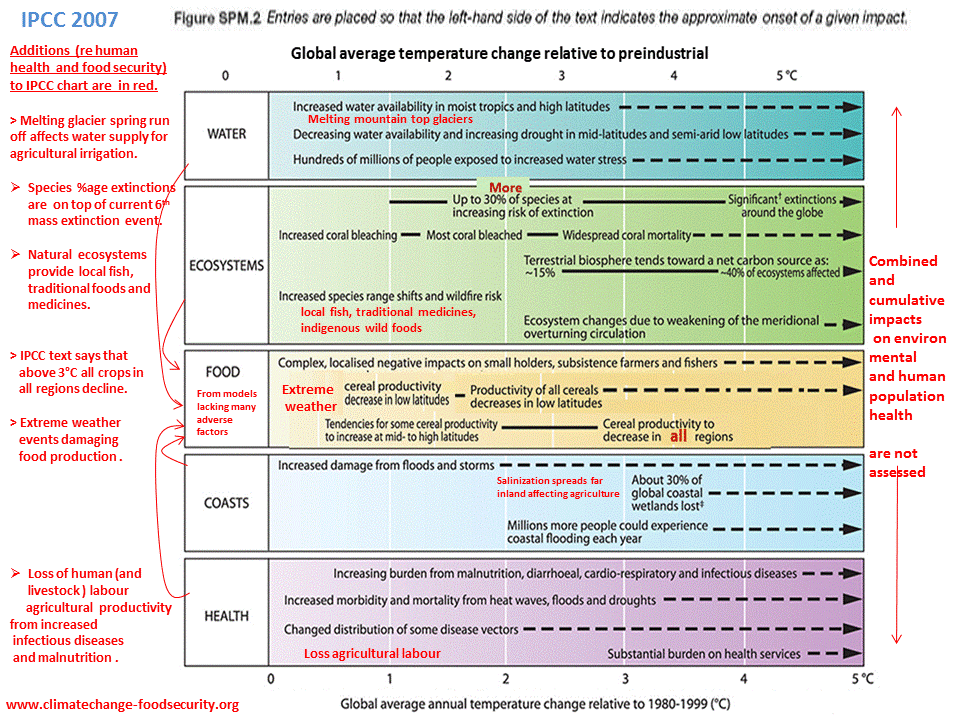
Globally some 3.6 billion ha (about 27% of the Earth's land surface) are too dry for rain fed agriculture.
Considering water availability, only about 1.8% of these dry zones are suitable for producing cereal crops under irrigation.
IPCC 2007
click for global temperature increase projection graph.
The climate crop models on which the IPCC relies to assess global climate change impacts on food production fail to capture about half the many inevitable impacts.
The scientists think that the CO2 fertilization positive effect from experiments in artificial environments are over estimates of the real world benefits for agriculture. Even so the IPCC climate crop models are based on CO2 research lab benefits.
Global climate change will take progressively more land out of food production as temperatures increase. There is an established trend of increasing global droughts since 1860 and there is total agreement that under increased global warming droughts will increase.